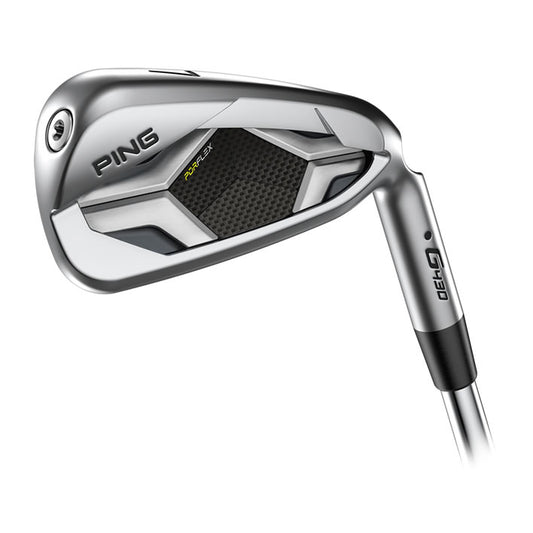
The Complete Guide to Buying Second-Hand Golf Irons
Whether you’re brand new to golf or looking to upgrade your current set, choosing the right irons can make a huge difference to your game. The good news? You don’t need to spend a fortune to get quality equipment. In fact, buying second-hand golf irons is often the best way to get premium performance at a fraction of the price.
This guide will walk you through:
- The basics of golf irons
- What to look for when buying used
- How to choose irons based on your skill level
- Common mistakes to avoid
By the end, you’ll feel confident choosing a set of irons that suits your game — not someone else’s.
Golf Irons: The Basics
Once your driver (or fairway wood) gets you off the tee, your irons do most of the hard work. They’re used for:
- Long approach shots
- Mid-range shots into the green
- Shorter, more controlled shots
- Getting out of tricky situations like bunkers or rough
A standard golf bag can hold up to 14 clubs, and typically 7–11 of these are irons, including wedges.
Iron Numbers Explained
Irons are usually numbered 3 through 9, followed by wedges such as:
- Pitching Wedge (PW)
- Gap Wedge (GW) / Approach Wedge (AW)
- Sand Wedge (SW)
The lower the number, the lower the loft and the longer the distance. Higher-numbered irons have more loft and are easier to control.
When browsing used sets online, you’ll often see descriptions like:
- 3–PW: A full iron set including a pitching wedge
- 5–SW: Starts at a 5-iron and includes a sand wedge
Why Buy New Golf Irons
While second-hand golf irons offer excellent value and are a fantastic option for many players, there are situations where buying new golf irons can be the better choice for your game.
1. You Want the Latest Technology
New iron models often feature:
- Improved face technology for better ball speed
- More refined weighting for forgiveness and consistency
- Optimised launch and spin characteristics
If you’re upgrading from much older irons, the performance difference with a new set can be noticeable — especially in distance consistency and feel.
2. You Need Custom Fitting Options
One of the biggest advantages of buying new irons is the ability to:
- Choose the exact shaft type and flex
- Select custom lengths and lie angles
- Fine-tune grip size and style
For golfers who are:
- Very tall or shorter than average
- Improving rapidly
- Playing regularly and seriously working on their game
…custom-fitted new irons can lead to better ball striking and more confidence.
3. You Play Frequently and Value Consistency
If you’re playing multiple times a week or competing regularly, new irons can offer:
- Perfectly fresh grooves for maximum spin and control
- Consistent performance across the entire set
- Longer lifespan before noticeable wear sets in
This is especially relevant for mid-handicap and improving players who rely heavily on their irons.
4. You Want a Full, Matched Set With No Compromise
While used sets are usually complete, new irons guarantee:
- Matching shafts throughout the set
- Uniform swing weights
- Brand-new grips fitted to your preference
This consistency can make gapping and shot control more predictable.
5. You’ve Outgrown Your Current Irons
If your swing speed, ball striking, or handicap has improved significantly, your old irons — even if they were great when you bought them — may now be holding you back.
Upgrading to new irons can help you:
- Transition into a more suitable iron category
- Gain better feedback and control
- Take the next step in your development
Why Buy Second-Hand Golf Irons?
Buying used doesn’t mean compromising on quality. In fact, many golfers upgrade frequently, which means there are loads of excellent iron sets available in great condition.
Key benefits of buying second-hand:
- Huge savings compared to new
- Access to premium brands and models
- Ideal for beginners who are still developing
- Less pressure if you decide to upgrade again later
What to Look for When Buying Used Golf Irons
Before clicking “buy”, here are the most important things to check:
1. Clubhead Condition
- Look for even wear on the clubface
- Grooves should still be visible (not completely smooth)
- Cosmetic marks are fine — performance damage is not
2. Shaft Type
- Steel shafts: Heavier, more control (common for most players)
- Graphite shafts: Lighter, more swing speed (great for beginners and slower swing speeds)
3. Shaft Flex
If you come in store we can recommend a shaft flex using data from our simulator
- Regular (R): Most common, suits many golfers
- Stiff (S): Faster swing speeds
- Senior (A) / Ladies (L): Slower swing speeds.
4. Grip Condition
- Factor re-gripping costs into your budget if needed
- Any club with a worn or poor-quality grip is regripped with a good, playable grip before sale.
If a grip is already in good condition, it is left as is. No club is sold at Eagle with a really poor grip.
Choosing Golf Irons to Suit Your Ability
Beginners (New to Golf)
If you’re just starting out, forgiveness is everything.
What to look for:
- Cavity-back irons
- Larger clubheads
- Perimeter weighting
These irons help get the ball airborne more easily and reduce the impact of off-centre hits.
Avoid:
- Blades (small thin heads) or “tour” irons
- Extra stiff shafts
- Long irons (3–4) if you struggle to hit them
Tip: Many beginners are better off with a 5-iron to PW set.
High-Handicap Golfers
High-handicap players still benefit most from forgiveness, but may want a bit more distance and consistency.
What to look for:
- Game-improvement irons
- Stronger lofts for extra distance
- Wide soles to help with turf interaction
- Steel or graphite shafts depending on swing speed
Good news: This category has huge choice on the second-hand market.
Mid-Handicap Golfers
This is where personal preference really comes into play.
What to look for:
- Players-distance or cavity-back irons
- Slightly smaller clubheads = More feedback and control
- Consistent gapping through the set
You might start to prefer feel and shot-shaping over maximum forgiveness — but there’s no rush to move into “players” irons unless your ball-striking is solid.
Common Mistakes to Avoid
- Buying irons that are too advanced for your skill level
- Choosing based on looks rather than forgiveness
- Ignoring shaft flex
- Assuming expensive = better
- Buying individual irons instead of a set
Final Thoughts
Your irons will be some of the most used clubs in your bag, so choosing the right set is worth taking your time over. Buying second-hand golf irons gives you the chance to get high-quality equipment without blowing your budget — and often with better performance than a cheap new set.
Whether you’re a beginner finding your feet, a high-handicapper chasing consistency, or a mid-handicapper refining your game, there’s a perfect pre-owned iron set out there for you.
And if you’re unsure, need advice, or want help choosing — we’re always happy to help you find the right fit.